
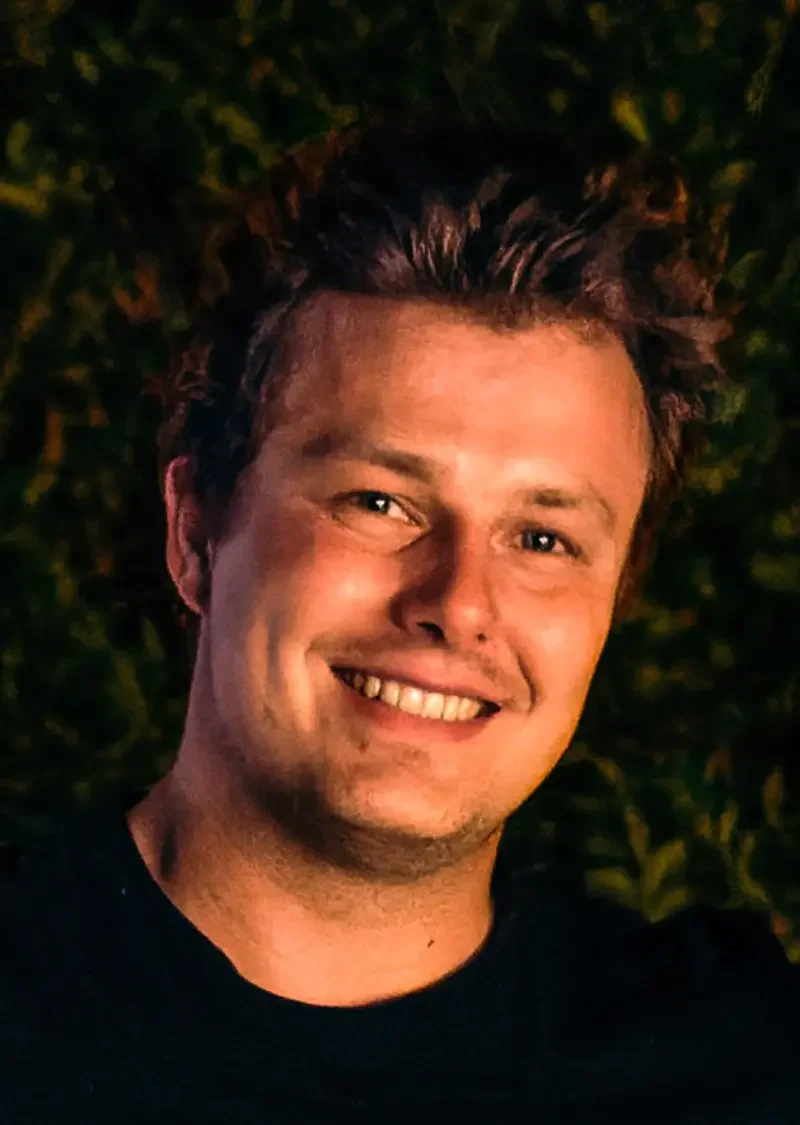
Maxime Beau
Princeton Neuroscience Institute
Princeton University
Biography
Maxime Beau is a postdoctoral researcher in Carlos Brody's lab at the Princeton Neuroscience Institute, where he records up to eight Neuropixels 3.0 probes simultaneously in freely moving rats to study attention control, asking how distributed circuits select task-relevant sensory information. He has worked with Neuropixels since 2018, when he joined Michael Häusser's lab at University College London for his PhD, co-mentored by Dimitar Kostadinov. There he led a multi-lab effort (with the Cohen, Hull, Lisberger and Medina labs) to predict cerebellar cell types from their electrophysiological signature by pairing Neuropixels with optogenetic tagging and deep learning (Beau* et al., Cell 2025; data at c4-database.com), and developed a method to separate genuine monosynaptic connections from spurious correlations in dense recordings, which he used to study how Purkinje cells drive their targets in the cerebellar nuclei during locomotion. Along the way he wrote NeuroPyxels, the first Python library for Neuropixels analysis (https://github.com/m-beau/NeuroPyxels), and PixelMap, a browser-based channel map generator (https://pixelmap.pni.princeton.edu), and broadly contributes to open-source software (Bombcell, SpikeInterface). Before his PhD he trained in medicine and neuroscience in Paris (Descartes, UPMC, ENS) in Boris Barbour's lab. Personal website: https://m-beau.github.io
Talk Title: Identifying cell types from their extracellular electrophysiological signature
Neuropixels probes report the spiking of hundreds of neurons simultaneously, but say nothing about what those neurons are. Yet cell-type is critical to understanding the computational role of neurons, because the features that define a type, from ion channel content to connectivity, are the same features that constrain what a neuron computes. I will describe a strategy to recover that identity from extracellular signals alone, developed as a multi-lab collaboration (C4, the Cerebellum Cell Types Classification Collaboration) using the cerebellum as a testbed. We first built a ground-truth dataset by optotagging Purkinje cells, molecular layer interneurons, Golgi cells and mossy fibres in the cerebellar cortex of behaving mice. We then trained a semi-supervised classifier: variational autoencoders learn a compact representation of raw waveforms and autocorrelograms from thousands of non-tagged neurons, and a supervised small neural network maps that representation onto cell-types. The classifier generalizes between mice and non-human primates, and all steps of our approach can be applied to other brain regions in the future. This is the first method that allows recording five different cell-types simultaneously during behaviour without additional experimental steps, and it works in wild-type animals.